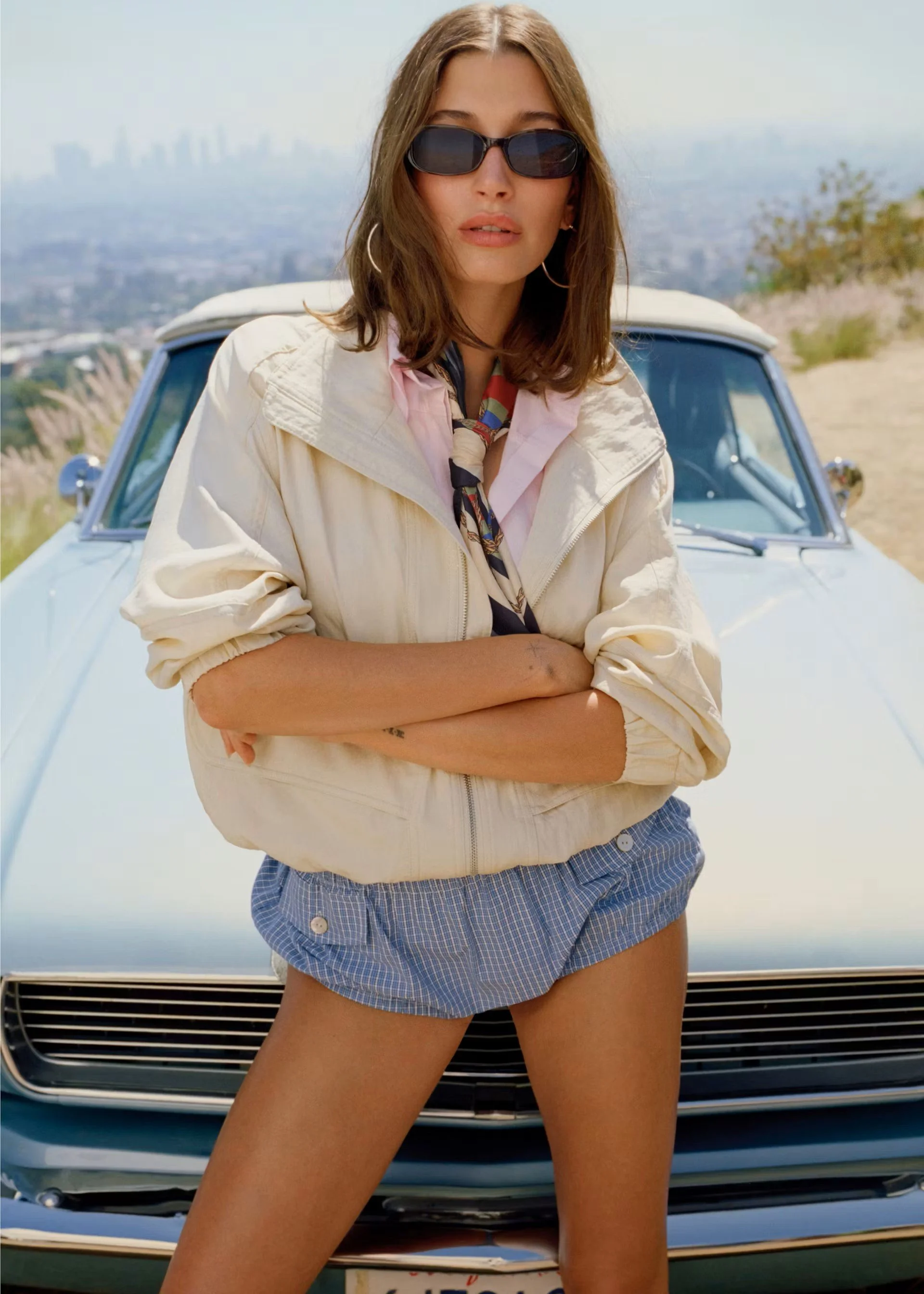
Hailey Bieber Is the New Face of Mango
Inside Hailey Bieber’s New Mango Campaign and Fashion’s Off Duty Luxury Obsession
Courtesy of Mango
There was a point when celebrity fashion campaigns tried very hard to look expensive. Wind machines. Gowns. Mediterranean staircases at sunset. A celebrity staring into the middle distance holding a handbag the size of a mortgage payment.
Now the most effective campaigns barely look like campaigns at all.
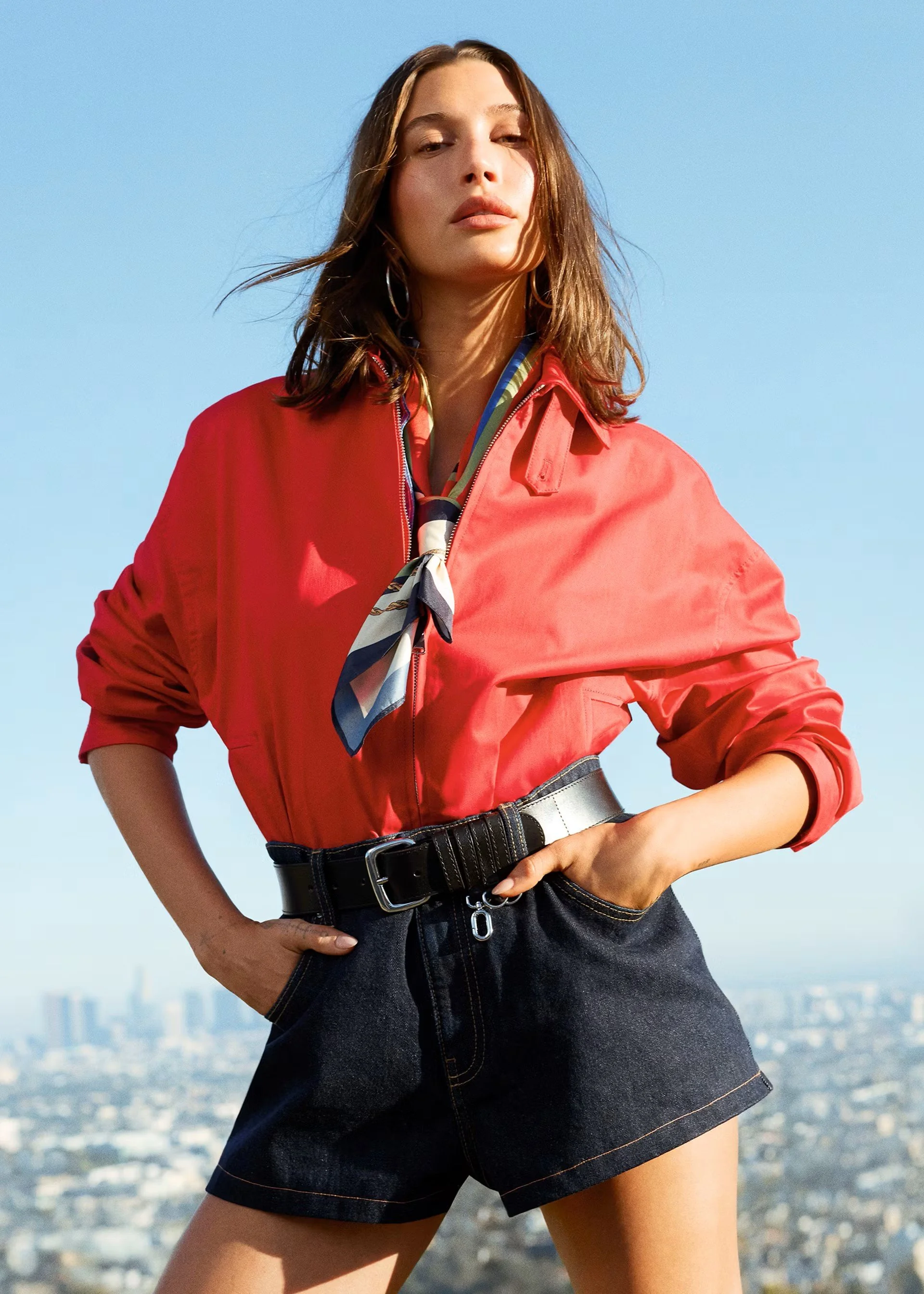
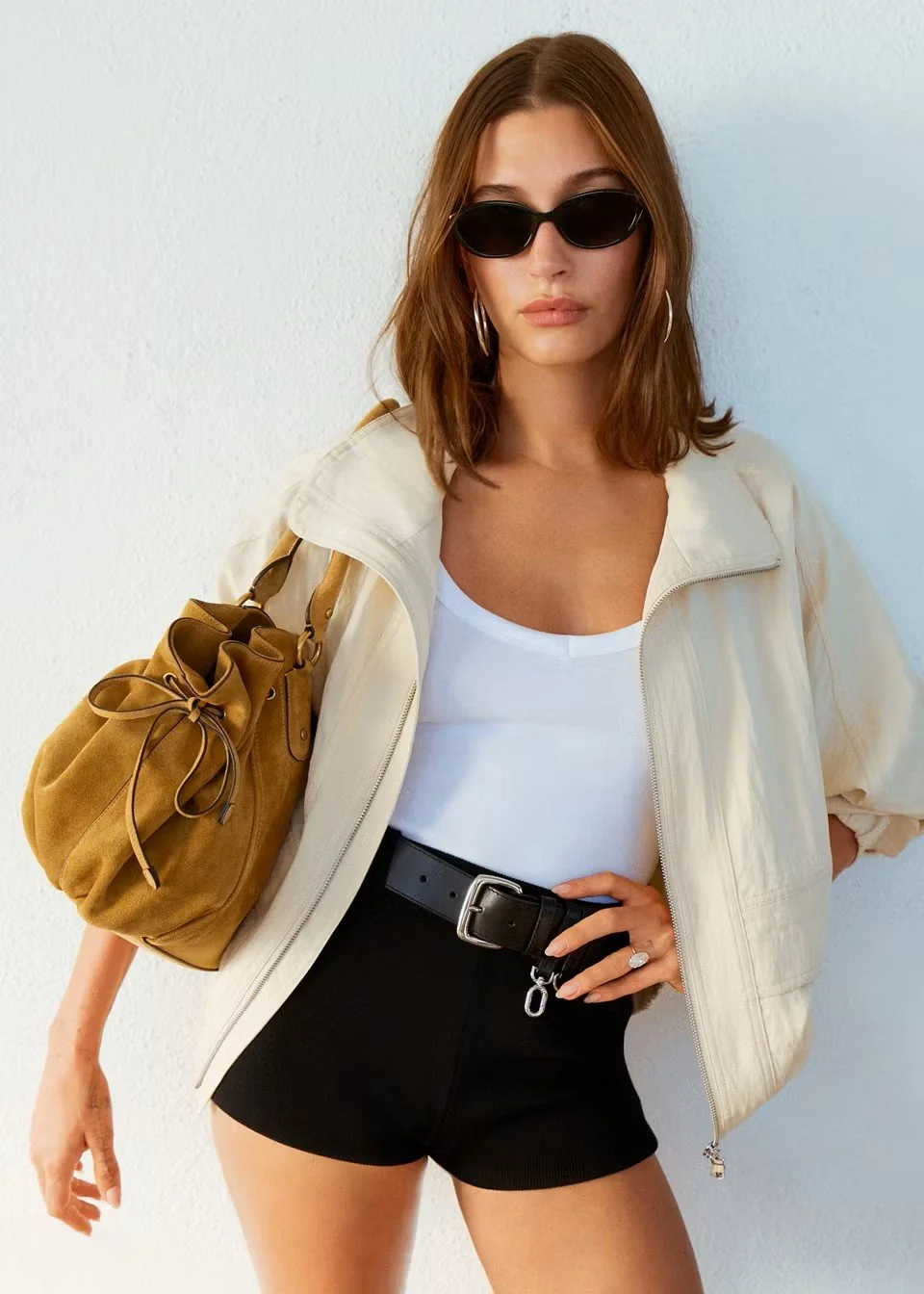
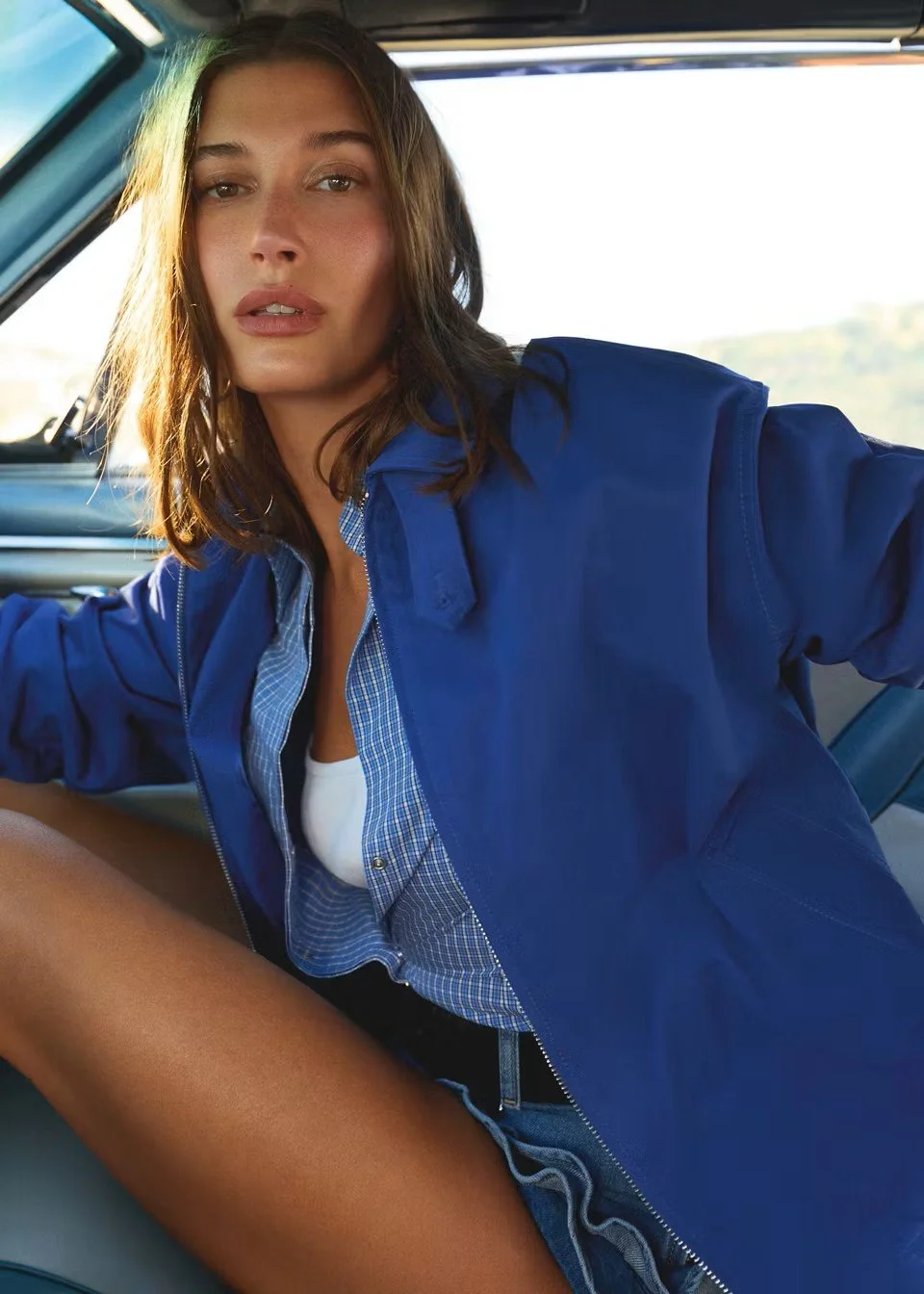
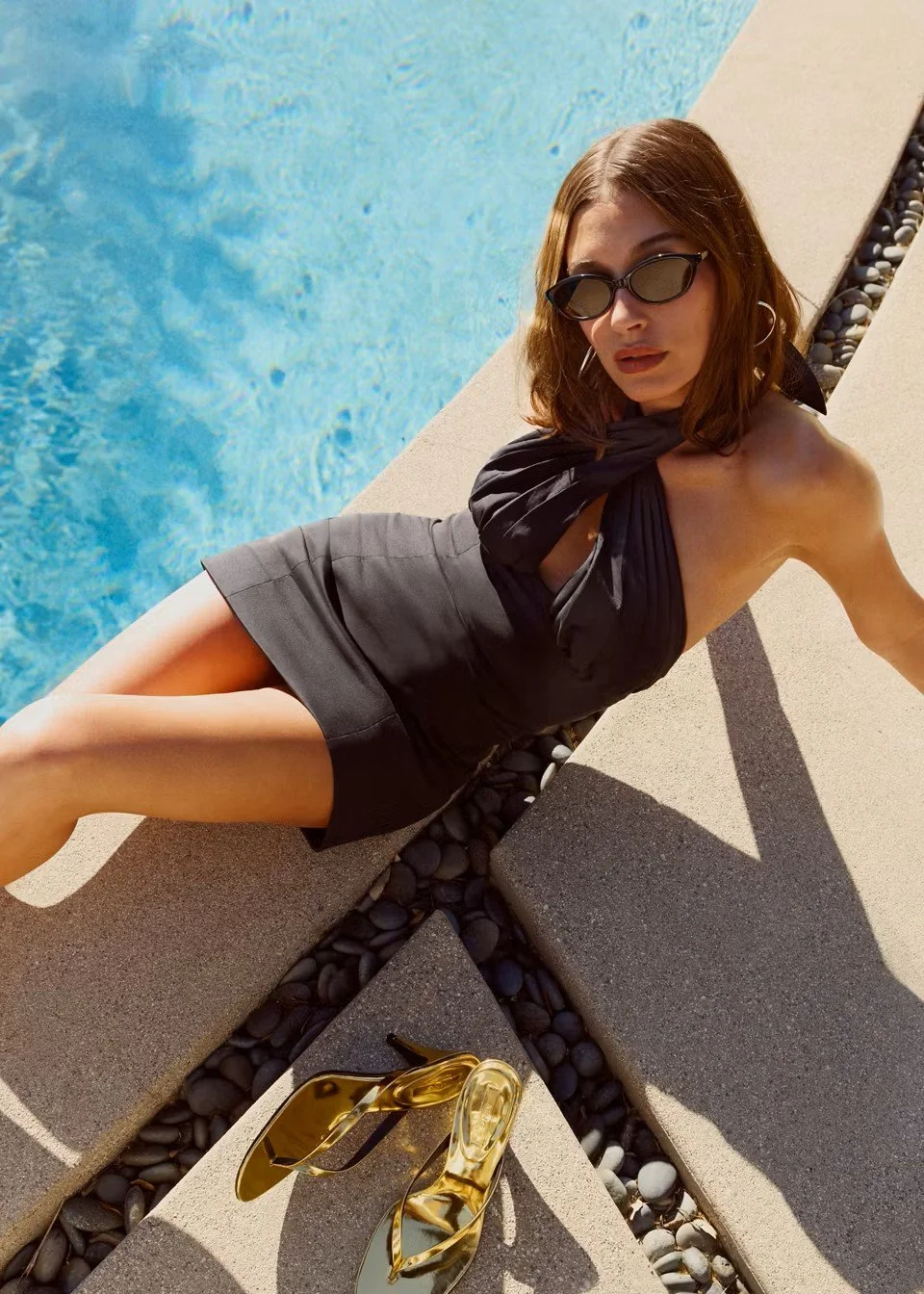
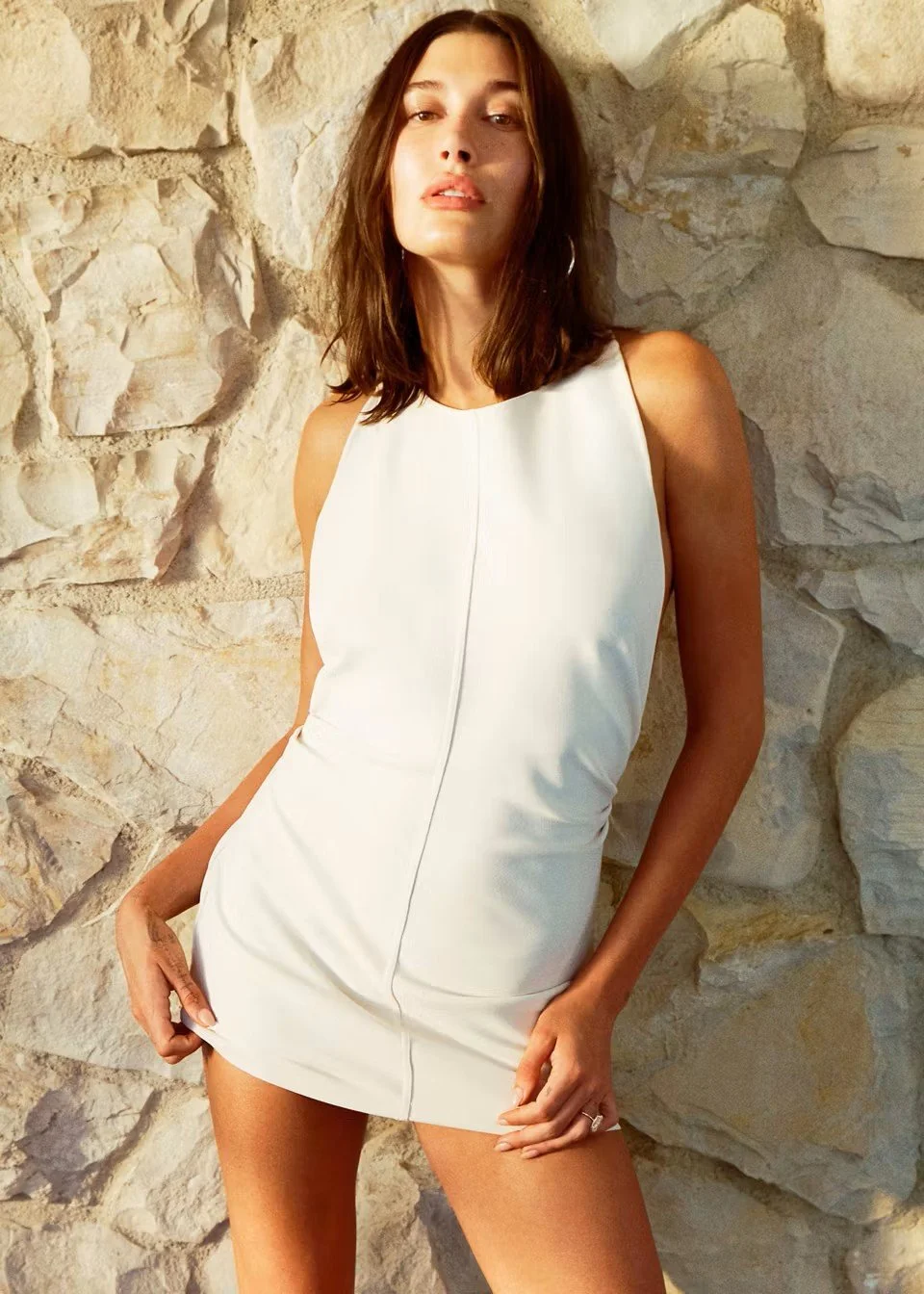
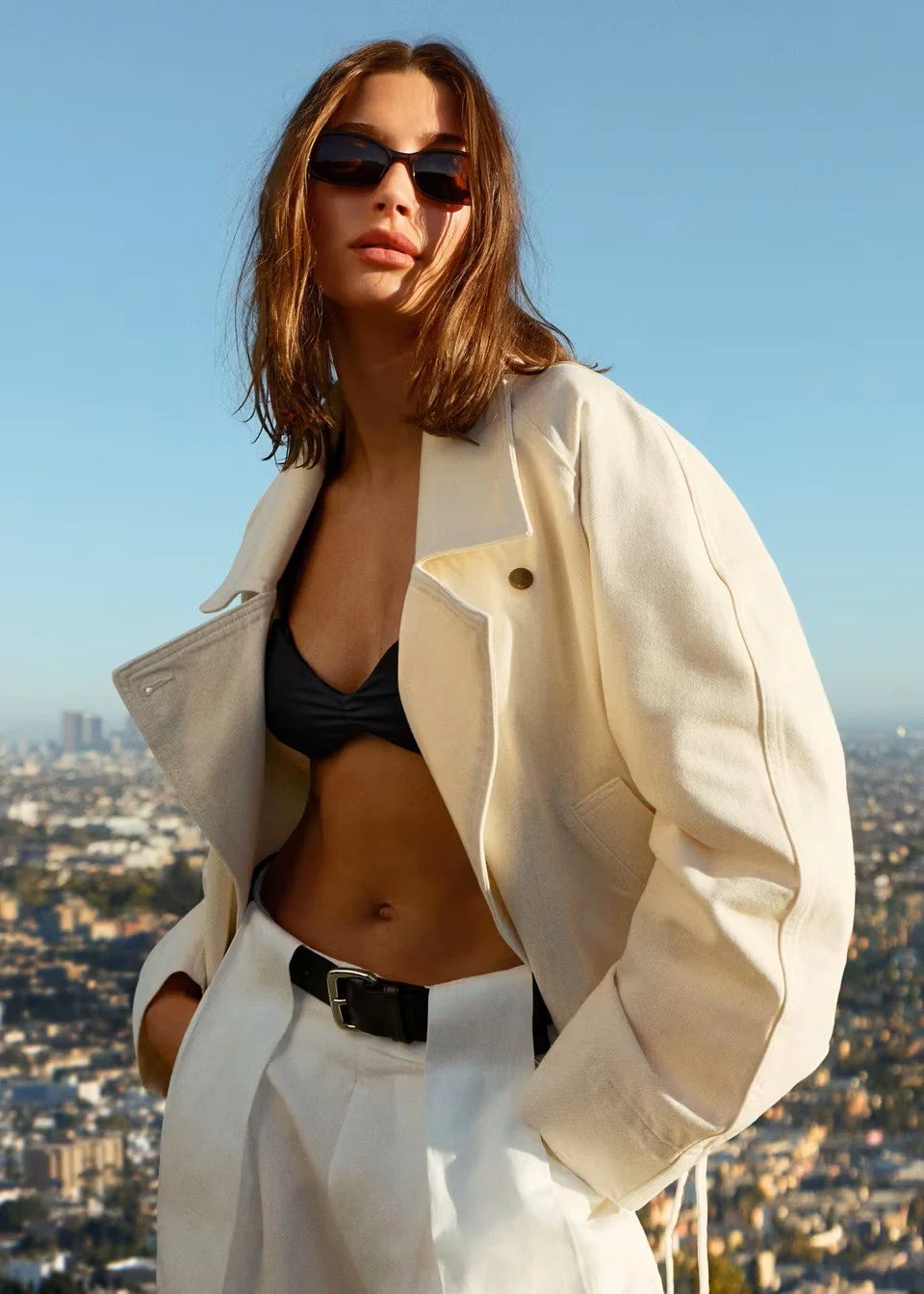
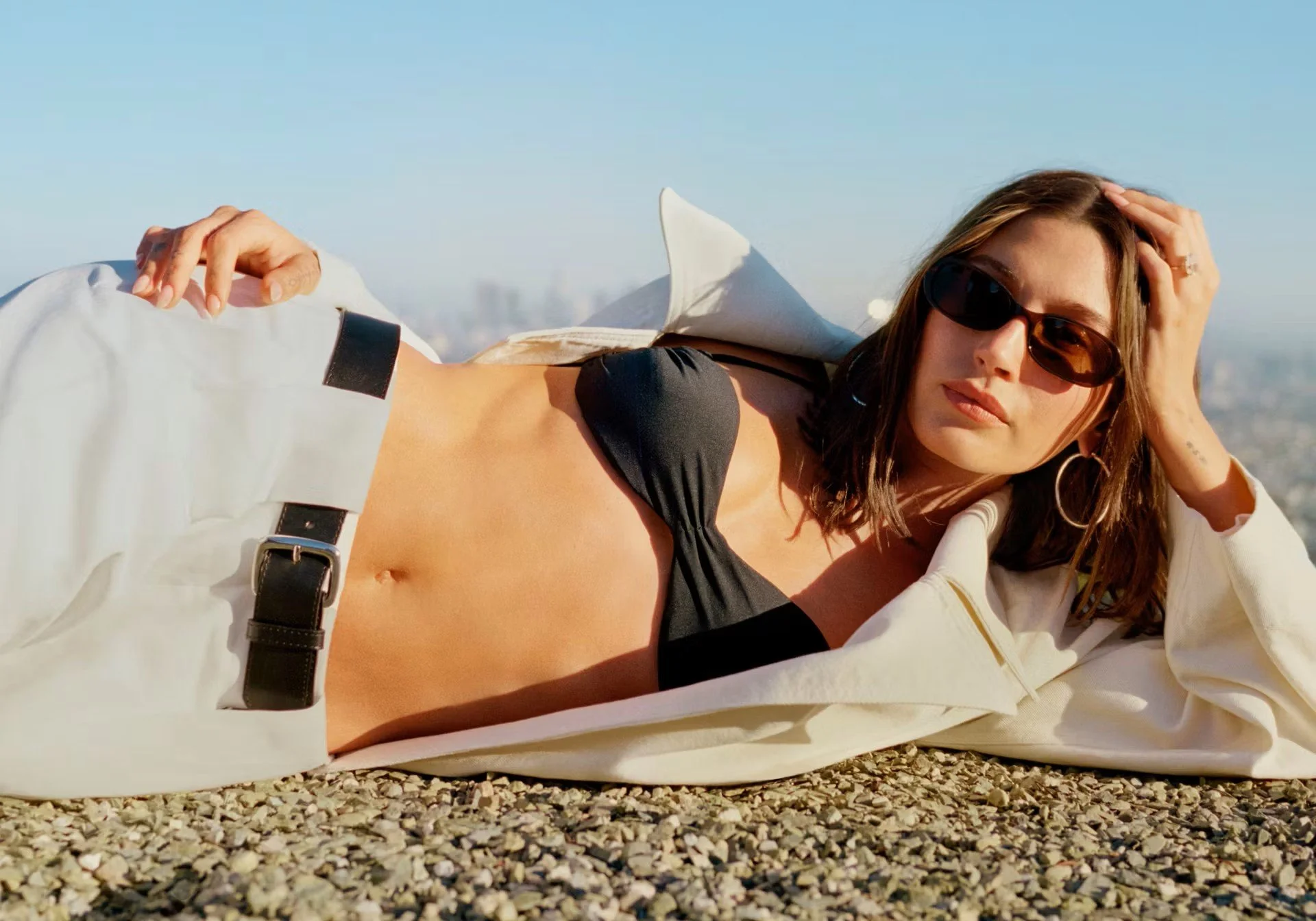
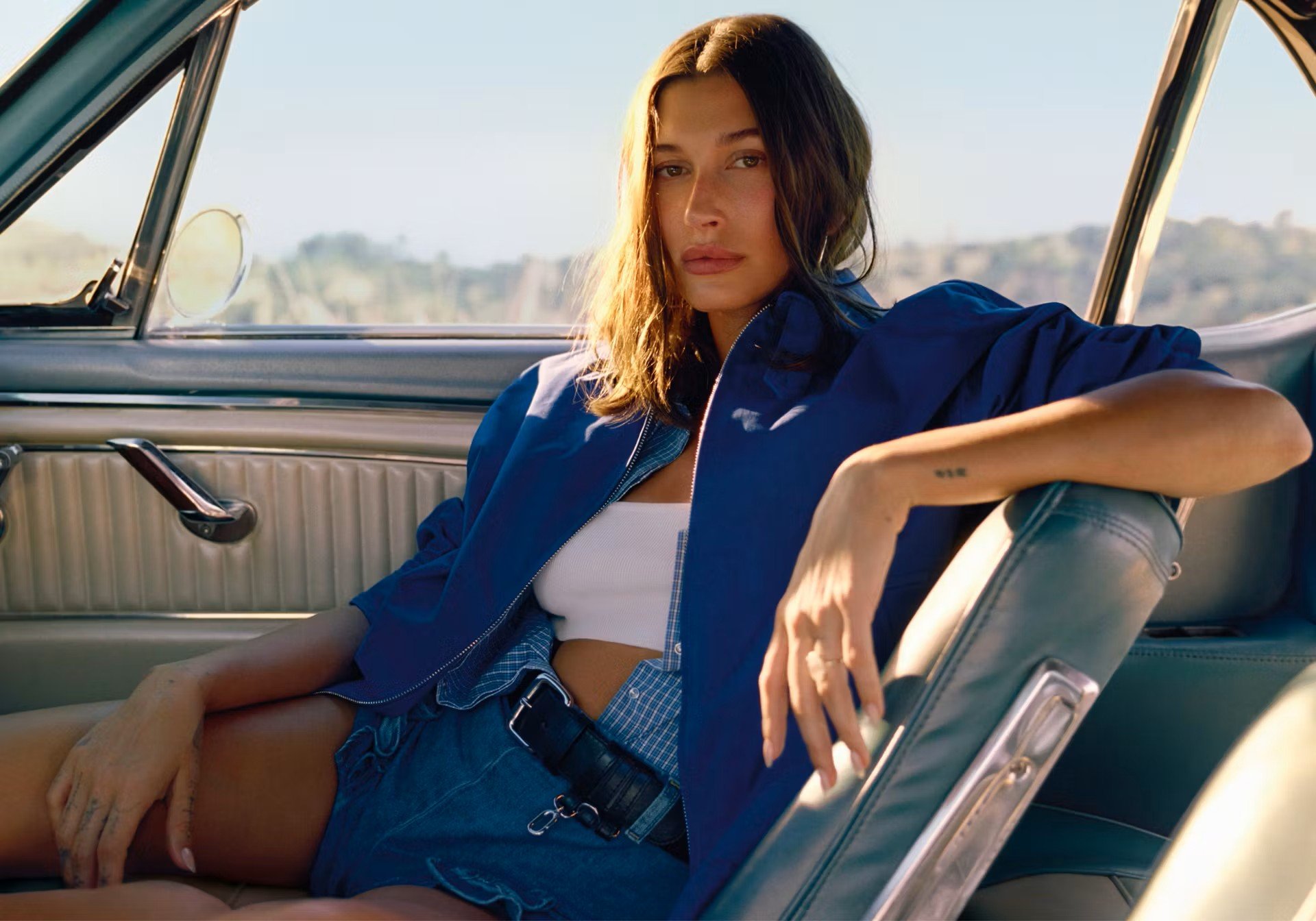
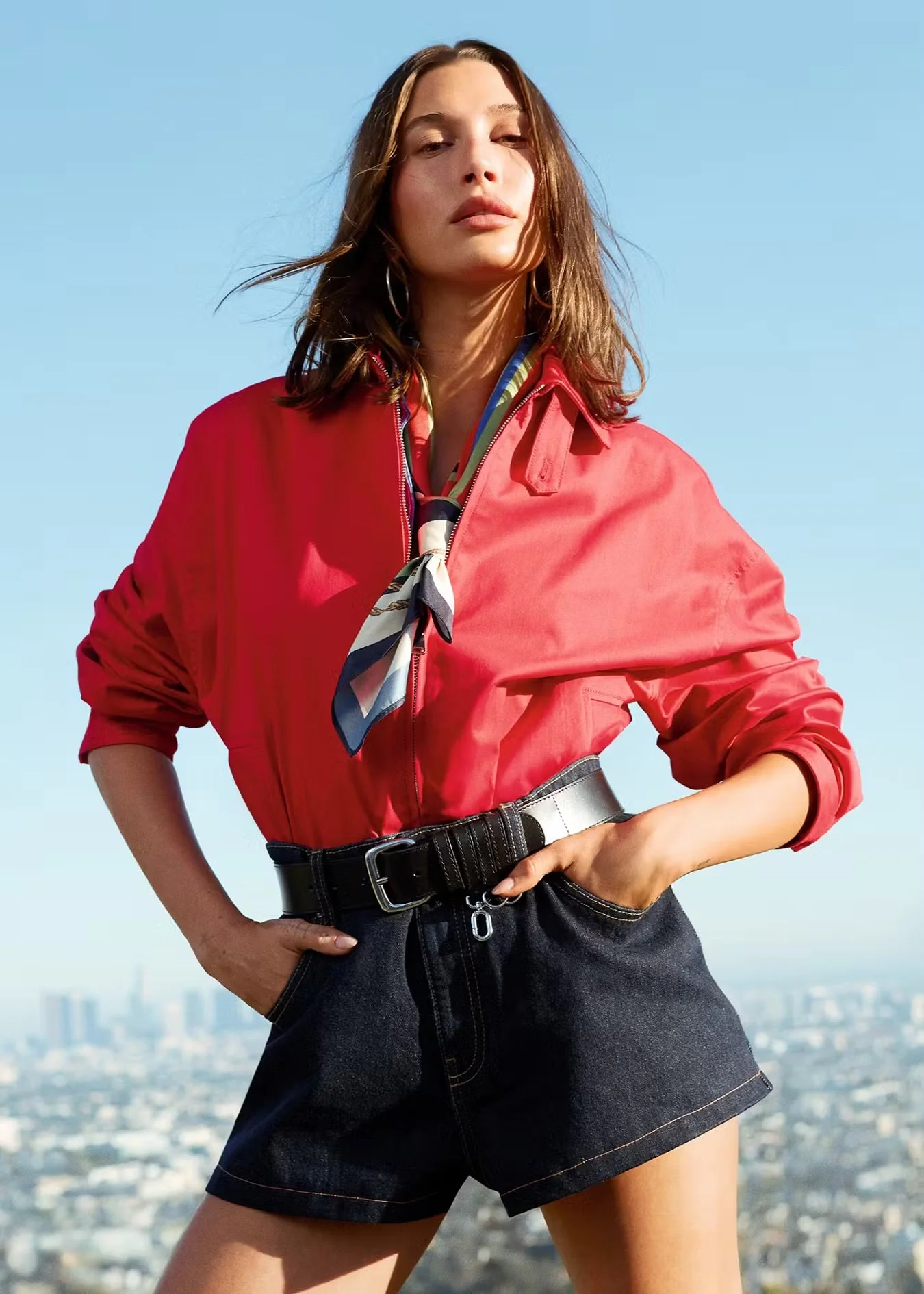
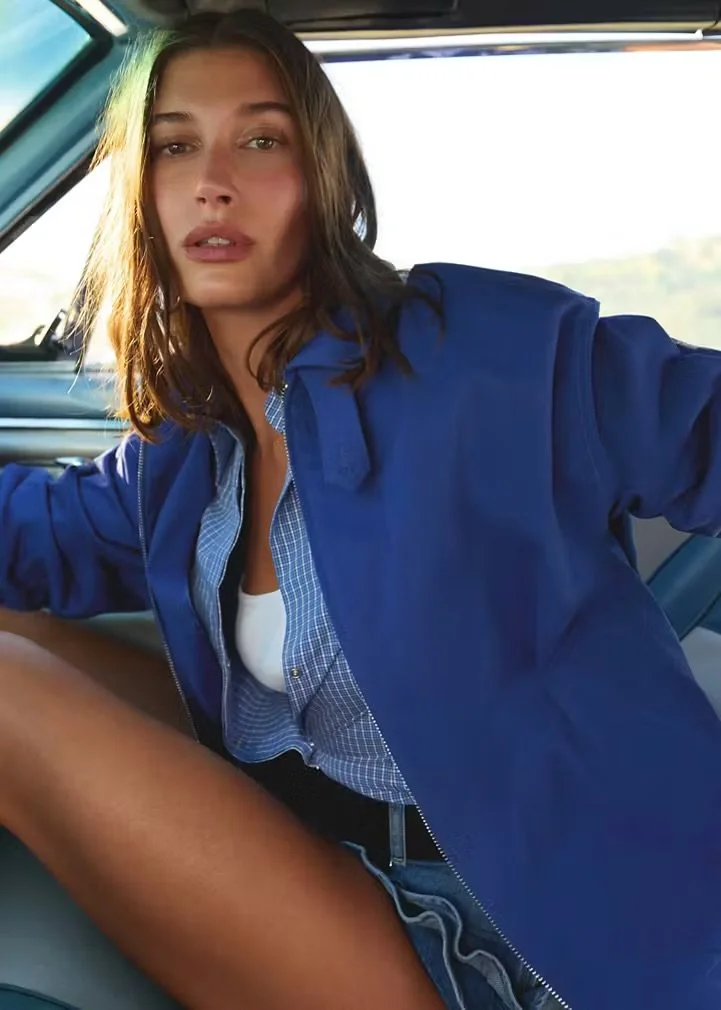
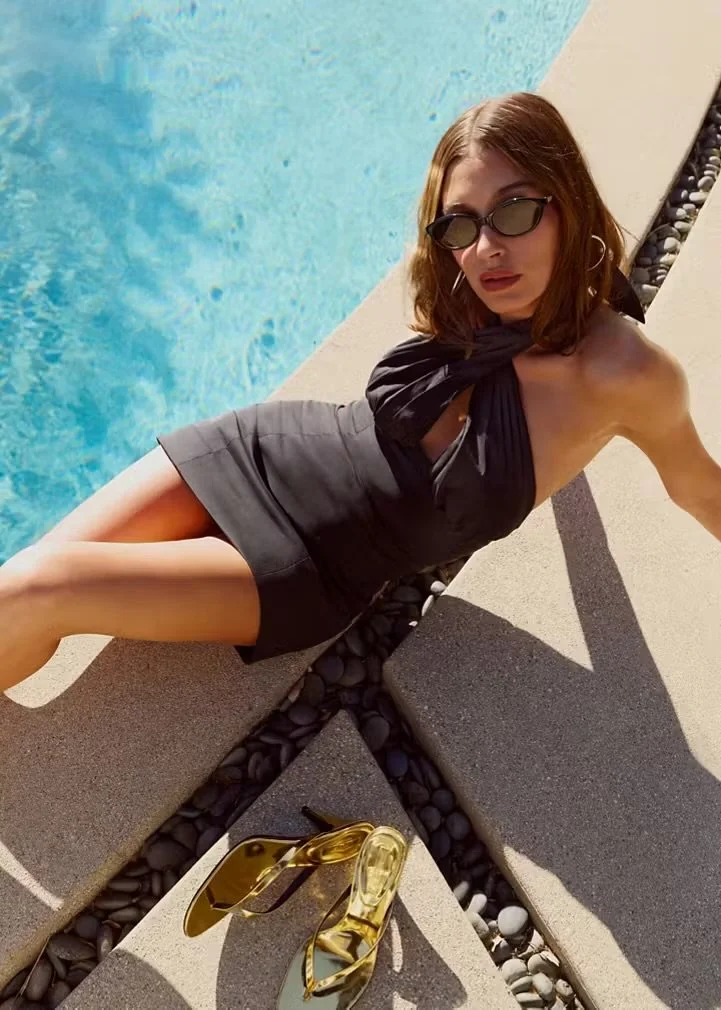
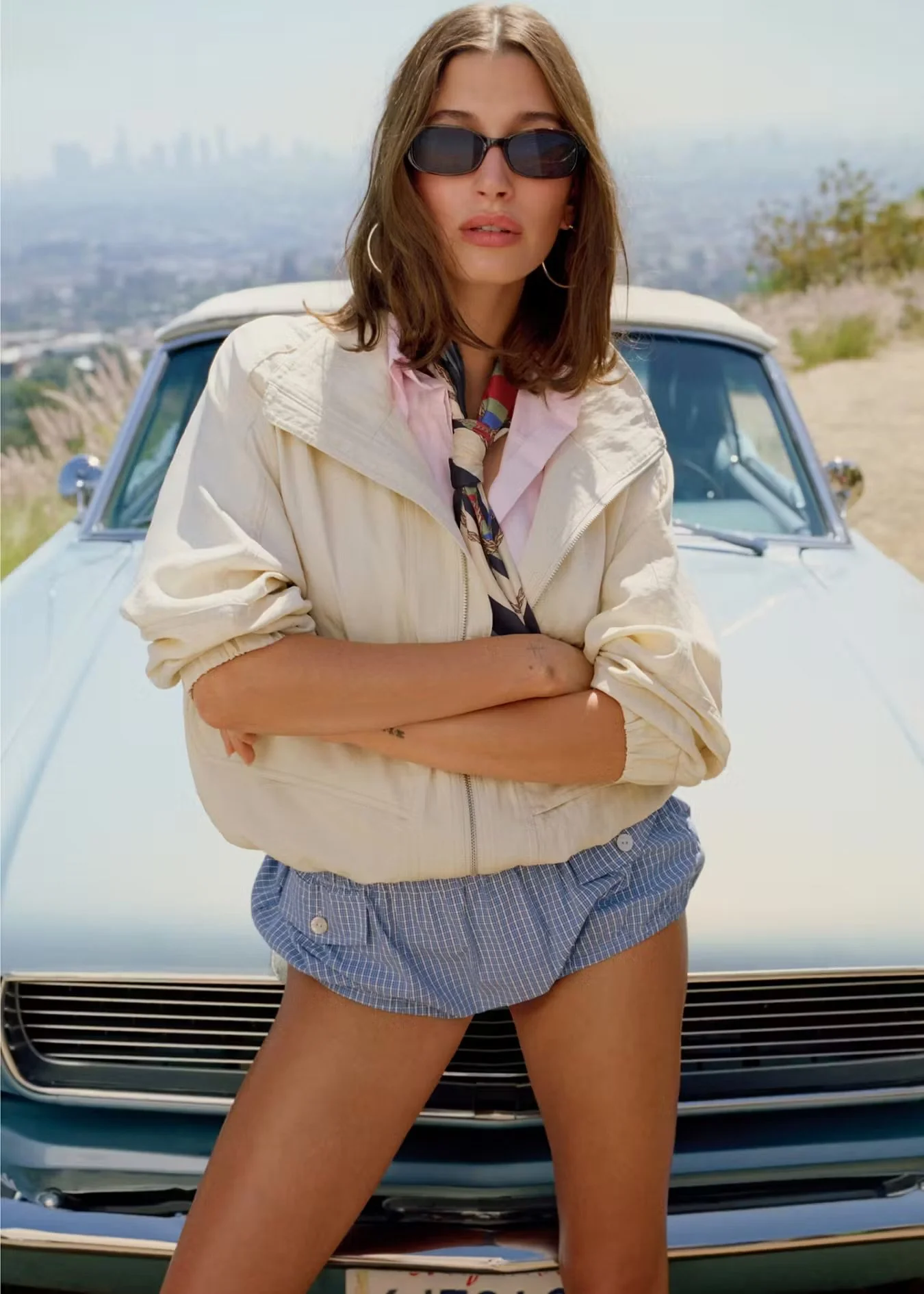
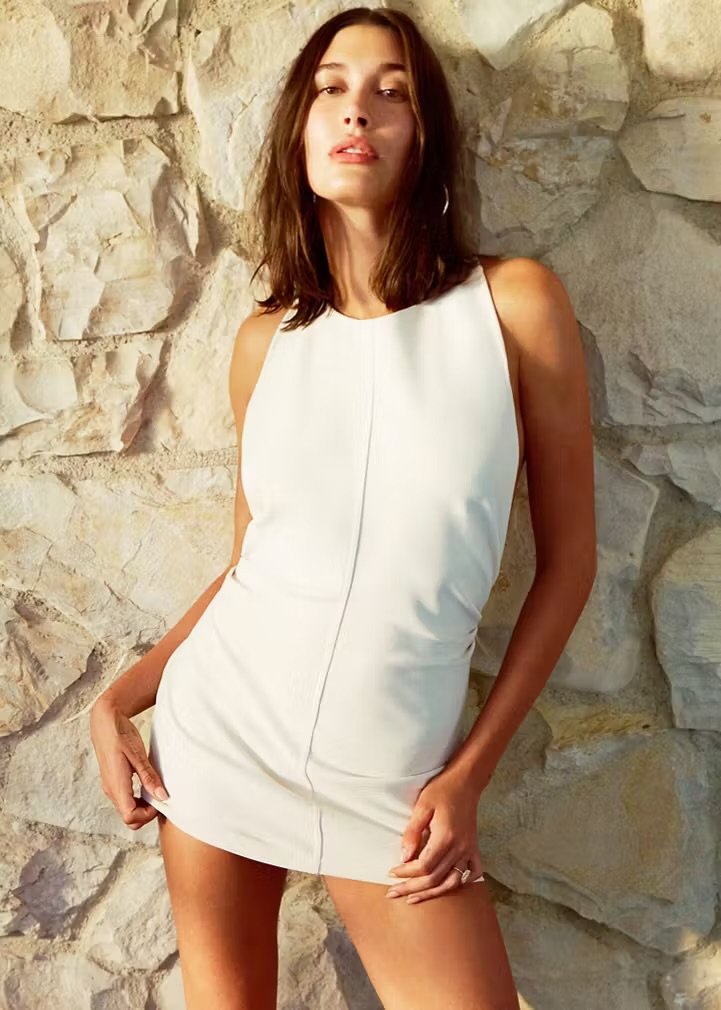
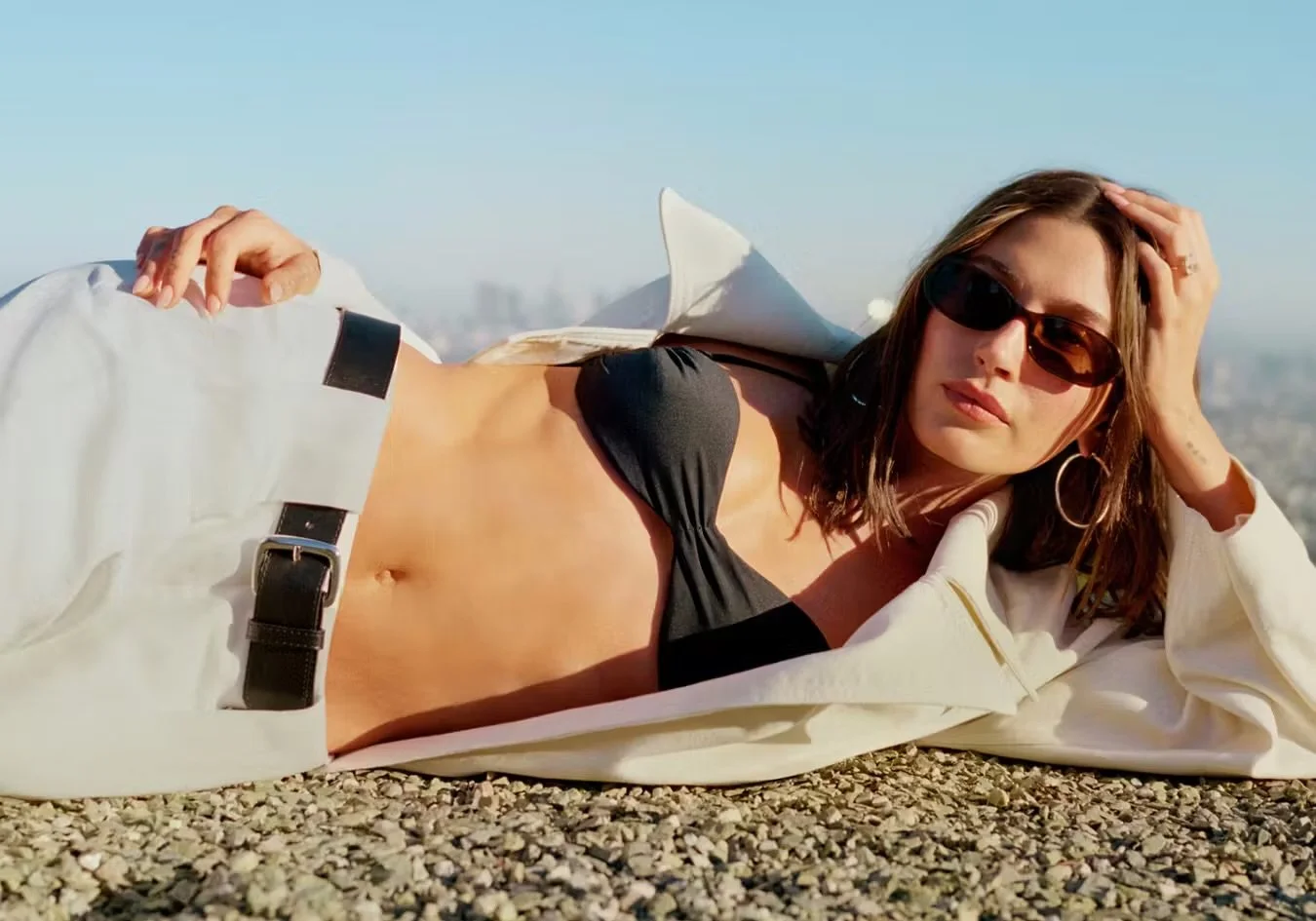
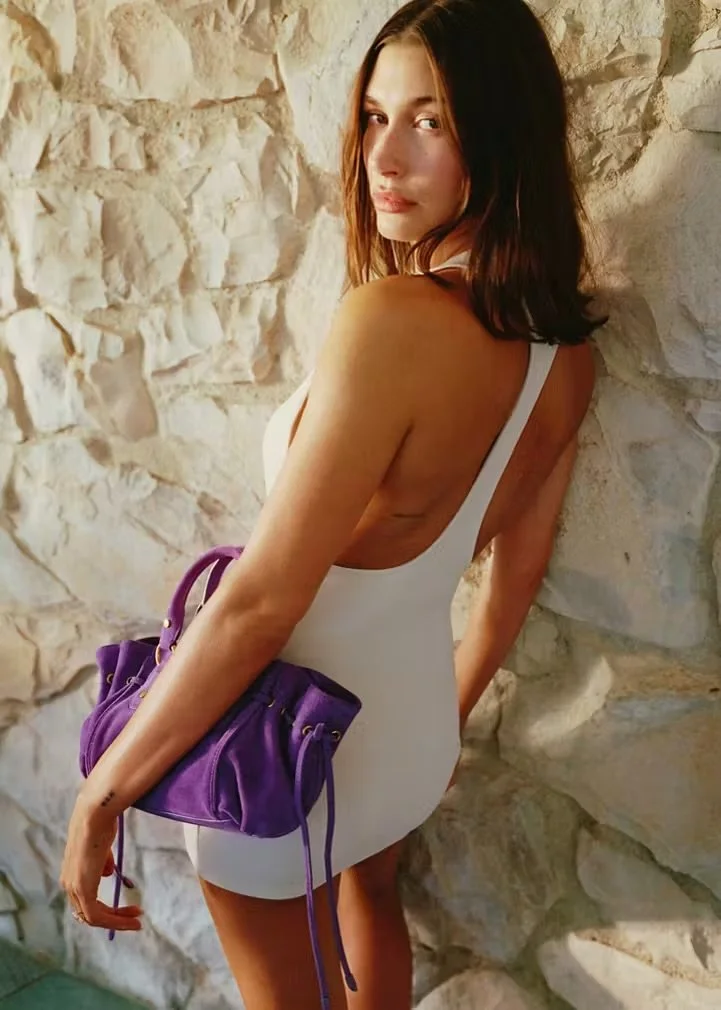
That is part of what makes the new Hailey Bieber partnership with Mango feel so current. The imagery is sparse, warm, and almost aggressively casual. Oversized blazers worn over tiny shorts. Ribbed tanks. Black sunglasses. Long clean lines. Hair tucked behind the ears like she accidentally looked that good on the way to get an iced matcha in Brentwood.
Courtesy of Mango
Fashion has spent the last few years moving away from maximalism and algorithm dressing. Consumers are exhausted by clothing that exists purely for social media. The endless parade of hyper-trendy micro aesthetics has started to collapse under its own weight. What’s replacing it is something softer and more relaxed. Less “look at me,” more personal uniform. Less internet performance, more woman with excellent taste who throws the same leather jacket over everything and somehow always looks expensive.
That’s exactly where Mango seems to be repositioning itself.
Courtesy of Mango
For years, the brand occupied the space between mall retailer and European vacation impulse purchase. Reliable tailoring. Good coats. Linen sets people bought before trips to Italy. But lately the styling has become sharper. The silhouettes cleaner. The campaigns noticeably more restrained. The new Hailey Bieber imagery pushes the brand even further into that territory where high street fashion borrows visual cues from labels like The Row, Toteme, and Khaite without fully entering luxury pricing.
And honestly, that may be the smartest lane in fashion right now.
Luxury consumers are still spending, but the broader market has changed. People want versatility again. They want clothing that photographs well but also survives real life. Pieces that work at Erewhon, dinner, preschool pickup, and a last minute meeting without requiring a complete costume change in between. The fantasy now is less “red carpet” and more “woman with a beautifully organized carry-on and excellent skin.”
Courtesy of Mango
“Luxury consumers are still spending, but the broader market has changed. People want versatility again. They want clothing that photographs well but also survives real life. Pieces that work at Erewhon, dinner, preschool pickup, and a last minute meeting without requiring a complete costume change in between. ”
Courtesy of Mango
Hailey Bieber has quietly become the blueprint for that aesthetic.
Not because her wardrobe is especially revolutionary, but because it’s highly repeatable. Large leather jackets. Slim sunglasses. Tiny gold earrings. Loafers. Structured totes. Tailored trousers sitting slightly too long over sneakers. Even when she wears luxury labels, the styling rarely feels inaccessible. That distinction matters. Consumers no longer want aspirational fashion that feels unattainable. They want proximity. The illusion that maybe they could recreate the same look with the right blazer and a good lip treatment.
Courtesy of Mango
Brands understand this.
Celebrity campaigns used to rely on transformation. Now they rely on familiarity. The goal is to make shoppers feel like they are stepping slightly closer to an existing lifestyle they already recognize online. It’s why the campaign images feel almost candid, even when they obviously are not. Nothing appears overly polished. Nothing screams “fashion.” Which, ironically, is exactly what fashion looks like right now.
The rise of this aesthetic has also coincided with a larger return to what could best be described as edited dressing. Fewer statement pieces. Fewer chaotic trend cycles. More repetition. The same black sunglasses every day. The same gold hoops. The same leather jacket thrown over everything from workout sets to tailored pants.
It’s anti-algorithm dressing disguised as algorithm dressing.
And Mango entering this space matters because it signals something larger happening in retail. Consumers still want the visual language of luxury fashion, but they are becoming far more selective about where they spend heavily. A $4,000 coat no longer feels necessary to achieve a polished look when brands have become increasingly adept at replicating proportion, styling, and fabrication cues at lower price points.
Courtesy of Mango
That doesn’t mean fast fashion has suddenly become luxury. It hasn’t. Fabric quality, tailoring, and longevity still separate the categories pretty quickly in person. But aesthetically, the gap has narrowed in a way that would have been difficult to imagine ten years ago.
The real product being sold now is taste.
And taste is much harder to manufacture than trend.
What makes the Hailey Bieber effect particularly influential is that her style rarely depends on novelty. She repeats silhouettes constantly. Black leather jackets. Narrow sunglasses. Clean white tanks. Slightly oversized tailoring. In an industry historically addicted to reinvention, repetition suddenly reads chic again.
Courtesy of Mango
Fashion tends to move like a pendulum after periods of excess. The ultra loud era of logos, neon colors, heavy contour makeup, and maximalist influencer culture was eventually going to burn out. What replaces those periods is usually restraint. Not boring restraint. Controlled restraint. Clothing that allows the wearer to remain visible instead of being swallowed by the outfit itself.
That’s the mood sitting underneath this Mango campaign.
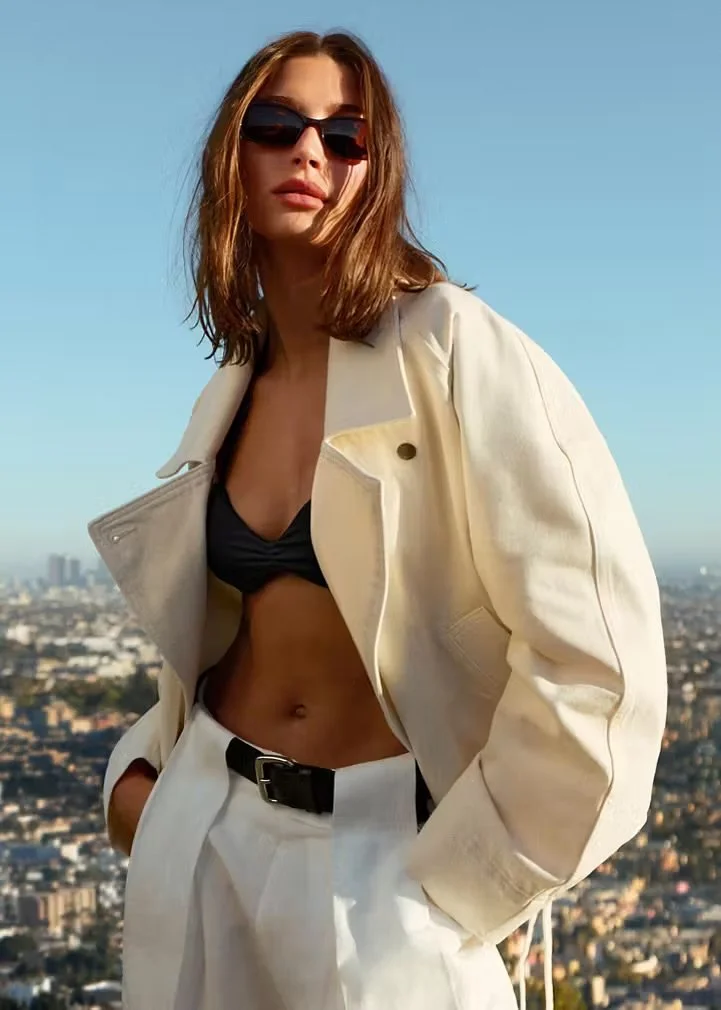
Courtesy of Mango
Less costume. More atmosphere.
And perhaps that is why the images are resonating so strongly online. They don’t ask the viewer to become someone else entirely. They simply offer a cleaner, cooler version of the person they already imagine themselves to be.