
No, Your Birkin Is Not an Investment: The Truth About Hermès, Resale Value, and the Fantasy of Luxury ROI
A clear look at the real cost and resale truth behind the famed Hermes Birkins and why the investment narrative doesn’t hold up once you do the math.
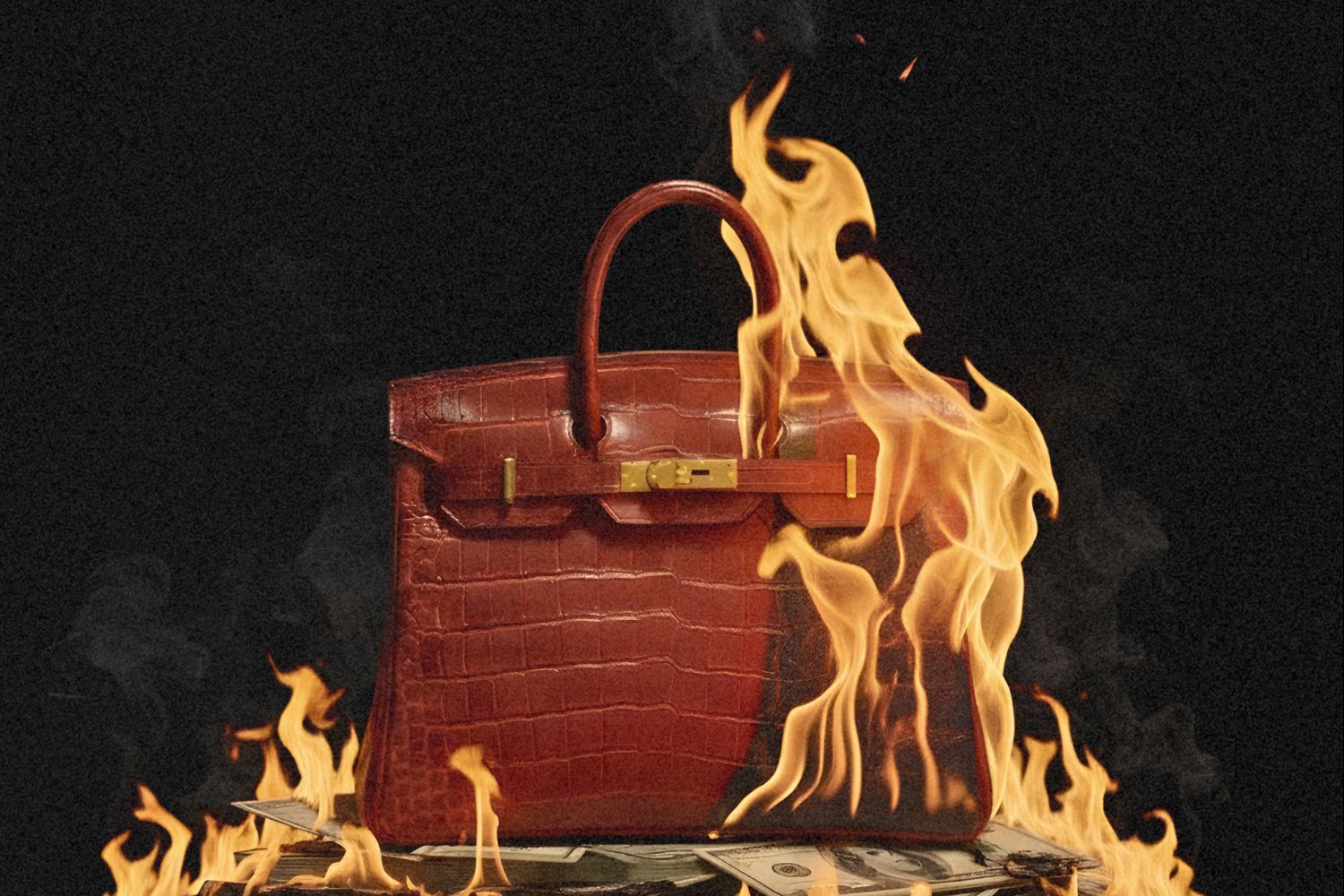
The Myth Everyone Wants to Believe
Clutch your pearls for what I’m about to say: handbags are not investments. And yes, we’re looking at you too, Chanel. There are rare exceptions, of course — museum level, one of one luxury objects that function more like collectible art than accessories. Diamond metal Kellys created for private clients. Archival commissions with documented provenance. Pieces so rare most people will never see one in real life, let alone be offered one. If you have to ask whether your bag falls into this category, it doesn’t. Your Birkin is not that. And neither is your Chanel flap.
“If you’re questioning whether your bag qualifies as an investment, that’s your answer.”
The reason this conversation persists isn’t ignorance — it’s because luxury culture has mastered the art of blurring the line between holding value and being an investment. Social media, resale headlines, and endless forum discourse have flattened those ideas into one reassuring narrative. It sounds smart. It just isn’t. Because a Birkin does not cost what people say it costs.
The Cost No One Likes to Count
When people call a Birkin an investment, they point to the boutique price and stop there. What they rarely factor in is access. A Birkin is not something you simply buy — it’s something you’re offered. And in most major markets, that offer comes after significant pre spend across other categories.
The counter argument is familiar: if you genuinely love Hermès, you’d be purchasing ready to wear, shoes, fine jewelry, and home anyway. The bag is a byproduct of loyalty. In theory, that sounds reasonable. In reality, it’s where the math gets uncomfortable.
Access is highly market dependent. In competitive boutiques like Beverly Hills, Newport Beach, New York, and other global hubs, documented pre spend routinely sits between $20,000 and $50,000 — often more. This isn’t speculation; it’s been dissected for years by people actively playing the game.
So when someone says a Birkin costs $15,000, what they really mean is that the bag cost $15,000. The real cost is closer to $45,000 to $65,000. That’s the number that matters.
Why This Isn’t Investing — It’s Math
If you put that same amount of money into an actual investment vehicle, you don’t need approval, relationships, or a curated purchase history. You don’t lose value because you used it incorrectly. You don’t have to keep it pristine to justify the decision.
A Birkin only performs under narrow conditions: you gain access, keep it nearly untouched, and hope demand holds. And even then, resale usually means recovering part of what you spent — not generating true profit once access costs are included.
Chanel operates off the same psychological loop. Annual price increases have convinced people that buying earlier is being smart. But price increases are not returns. Retention is not appreciation. A rising retail number doesn’t magically transform a purchase into an asset — it just raises the cost of participation. That’s not investing. That’s luxury consumption with better storytelling.
“A rising retail number doesn’t magically transform a purchase into an asset — it just raises the cost of participation. That’s not investing. That’s luxury consumption with better storytelling.”
The Birkin Bait Loop
If pre spend were purely about brand love, this might feel less transactional. But the behavior tells a different story. Many people purchase strategic Birkin bait items — shoes, scarves, ready to wear, home goods — with the intention of immediately reselling them to recoup costs. Facebook groups and resale platforms are full of barely used Hermès items for exactly this reason.
These purchases aren’t emotional; they’re tactical. Ironically, this constant flipping floods the secondary market and weakens value across the very categories used to justify the system. The logic eats itself. Spend to access. Resell to recover. Call it smart. That’s not investing. That’s financial gymnastics designed to make luxury feel responsible.
The Secondary Market Fantasy
Buying a Birkin brand new on the secondary market doesn’t make it an investment either. A store fresh Birkin 25 — the size everyone is hunting right now — typically sits in the $25,000 to $35,000+ range on platforms like The Real Real, Fashionphile, and resale boutiques. That premium already includes someone else’s boutique access, their pre spend, and the markup baked into demand.
When you buy at that number, you’re entering at the absolute top of the market. Even if you never touch the bag, the likelihood of reselling it for the exact same dollar amount — let alone turning a profit — is extremely low, because resale platforms take a cut and private buyers expect a discount. And the moment you do carry it, the value starts going down. There is no scenario where a secondary market premium becomes profit — you didn’t discover a loophole; you just paid full price for the fantasy. And that’s fine. Just don’t call it an investment.
When the Bag Becomes a Trophy
Spend five minutes in online forums and you’ll see it: anxiety over scratches, corner wear, handle darkening, protective stickers left on hardware for years — sometimes never removed at all. At that point, the bag has stopped being a bag. It becomes a trophy. Not something you carry, but something you display to prove you won the game. That you figured out the system. That you gained access. The object becomes secondary to what it signals: status, proximity, membership.
Which raises the question: why are we buying bags so expensive that we’re afraid to use them? When an object is too precious to touch, it stops serving its purpose. What was designed to be functional becomes proof of arrival. Ironically, actually wearing your Birkin in the way it was designed has become the real flex.
“Ironically, actually wearing your Birkin in the way it was designed has become the real flex.”
About Wealth Signaling
Chasing a Birkin, and the ecosystem built around it, is also a form of wealth signaling — sometimes subtle, often aspirational. A significant number of people participating do not have the level of wealth the bag implies. They stretch. They rationalize. They participate for optics, not because they love the house, but because the Birkin functions as shorthand for status.
Yes, there are people who genuinely love Hermès and collect quietly because it brings them joy. They exist. They also tend to be less interested in convincing anyone that their purchase was financially sound. The loudest voices insisting these bags are investments are often the ones who need them to be.
“The loudest voices insisting these bags are investments are often the ones who need them to be.”
Let’s Be Honest About Desire
None of this is a moral judgment. There’s nothing wrong with wanting a Birkin. There’s nothing wrong with resale. There’s nothing wrong with luxury. What is disingenuous is pretending it’s a financial strategy.
You’re allowed to want a bag without needing it to be smart. Without needing to justify it. Without turning desire into a spreadsheet. If you want an investment, buy something designed to be one. If you want a bag, buy it and live with it. But let’s stop pretending that buying a handbag becomes smart the more we lie about why we wanted it.
